Highlights
- Hidrent secured a $300,000 offer on Shark Tank for 33.3% equity from Sharks Lori Greiner and Robert Herjavec.
- As of 2025, some reports peg Hidrent’s valuation at about $8.5 million.
- The business expanded nationwide beyond its original cities (Phoenix and Tampa), added phone-booking for non-tech-savvy users, and partnered with the International Association of Fire Fighters (IAFF), giving access to tens of thousands of potential firefighter contractors.
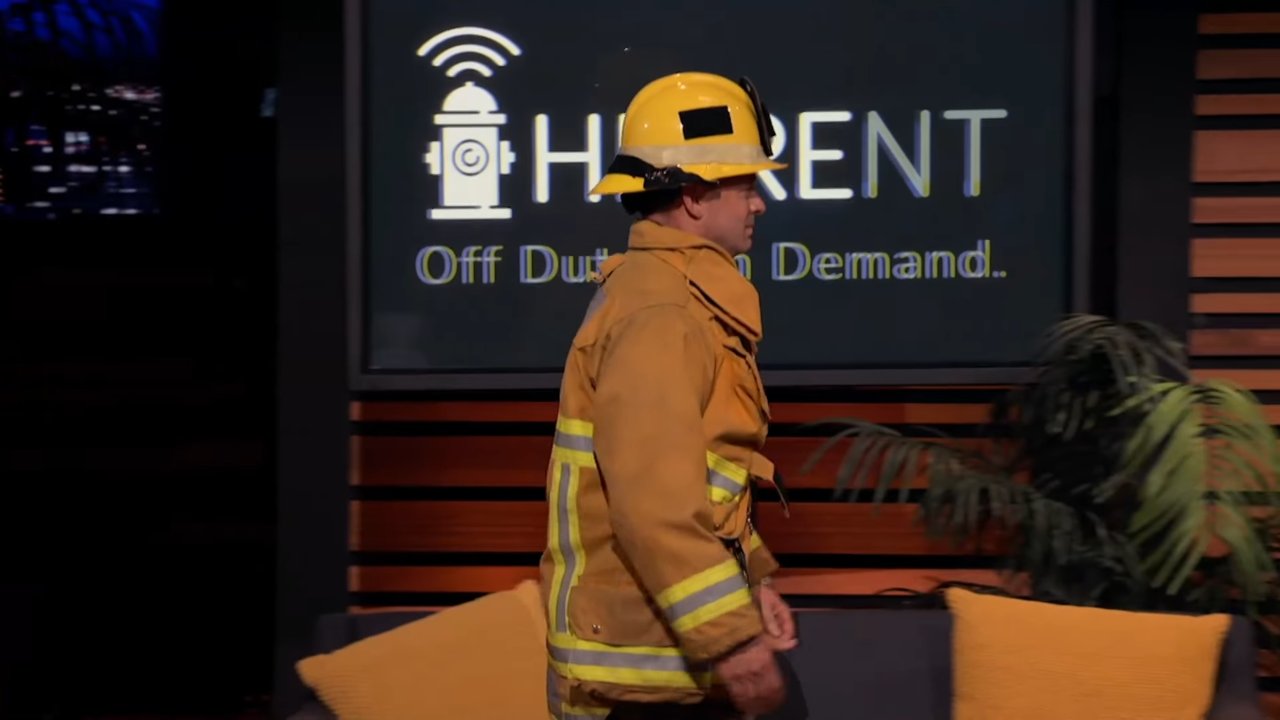
When Hidrent, now called Helpful Heroes, appeared on Shark Tank on Shark Tank Season 13, its founder, Dave Heimbuch, pitched a service-driven marketplace built on trust: connecting homeowners with off-duty firefighters available for handyman tasks.
That blend of public service, reliability, and convenience made Hidrent stand out among the many startups looking for investment.
Today, several years after the show aired, Hidrent has moved from a regional startup to a nationwide platform, with a much higher estimated valuation.
Hidrent Shark Tank Overview
| Field | Info |
| Company name | Hidrent |
| Founder(s) | Dave Heimbuch |
| Industry | Gig-economy / Home services marketplace |
| Product name | Hidrent (mobile/web platform connecting off-duty firefighters with clients) |
| Episode aired | Season 13, Episode 6 — Nov 12, 2021 |
| Asking | $300,000 for 8% equity (implied valuation ≈ $3.75 M) |
| Result | Deal accepted on air — $300,000 for 33.3% equity (with Lori Greiner & Robert Herjavec) |
| Shark with deal | Lori Greiner & Robert Herjavec |
Net Worth: How Much Is Hidrent Worth Today?
As of 2025, several sources report that Hidrent’s valuation has risen sharply to roughly $8.5 million — a big leap from its post-Shark Tank valuation of around $900,000.
That valuation seems rooted in a 2022 equity crowdfunding round on StartEngine, which reportedly gave Hidrent an $8.5 M valuation cap. On the show, post-money valuation was $0.9M while the 2025 market-perceived value is $8.5 M — roughly 9× the on-air value.
Hidrent Shark Tank Pitch
Many homeowners — especially seniors or those without time/skills — need trustworthy people to help with odd jobs (furniture assembly, light repairs, installations, etc.).
At the same time, off-duty firefighters often have the skills, time, and background checks to do such jobs. The challenge: how to match homeowners with trustworthy helpers reliably.
Hidrent proposed a marketplace/booking platform that connects off-duty firefighters with people who need home services — combining trust, flexibility, and social value.
Dave Heimbuch emphasized trust and the public-service angle — firefighters are generally seen as trustworthy and reliable. That resonated with the Sharks, particularly Robert and Lori.
The notion of “hiring a firefighter to help you hang a portrait or assemble furniture” stood out in a sea of gadgets and consumer products. Some Sharks — like Mark Cuban — voiced concern about scalability (covering “every neighbourhood”).
Pricing & business model presented:
- Hidrent charged homeowners about $72 per hour.
- Firefighters were paid about $60 per hour.
- The platform kept around 23% of the hourly revenue as its fee.
- At pitch time, Hidrent had generated roughly $850,000 in total sales since 2018.
Did Hidrent Get a Deal on Shark Tank?
Yes — the on-air result: Sharks Lori Greiner and Robert Herjavec offered $300,000 for 33.3% equity, which Dave accepted.
That meant the on-air implied post-money valuation was only $900,000 — far lower than the $3.75 M valuation Dave sought (based on 8% for $300k).
Several Sharks exited early — guest Shark Nirav Tolia and Mark Cuban cited concerns about scalability across many neighborhoods.
The deal came only after negotiations between Lori and Robert to pool resources and demand a generous equity share.
What Happened to Hidrent After Shark Tank
- The deal with Robert and Lori did not close after the show- the deal fell through during due diligence. However, the Shark Tank appearance was a huge marketing boost for the brand, and it experienced massive growth from the exposure.
- Hidrent broadened operations beyond Phoenix and Tampa to cover more cities across the U.S.
- The company launched a phone-booking service to cater to seniors or users uncomfortable with apps.
- Key partnerships: most notably with the IAFF, giving access to potentially hundreds of thousands of off-duty firefighters.
- Before Shark Tank: Hidrent was self-funded. Post Shark-Tank, Hidrent raised seed capital (reportedly > $660,000 in 2022) from outside investors, and ran a crowdfunding campaign on StartEngine — the latter assigned an $8.5 M valuation cap.
- Hidrent rebranded to Helpful Heroes.
How Is Hidrent Doing Today?
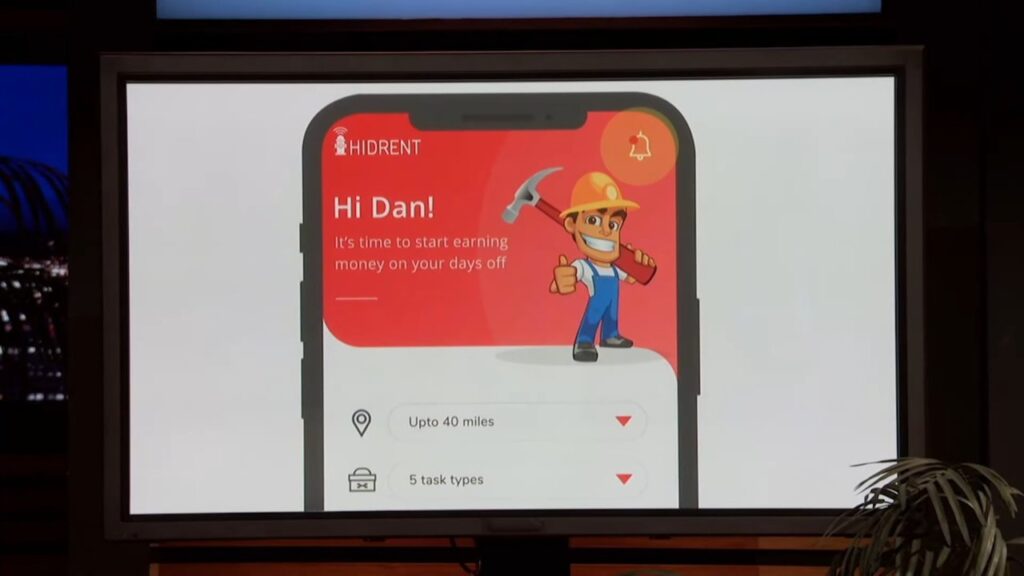
Hidrent remains active, offering nationwide services and phone-booking for non-app users. It operates as a two-sided marketplace (homeowners + off-duty firefighters), reportedly with a B2B service line as well.
Competitors and Market Comparison
Hidrent operates in the crowded home-services/gig-economy niche. Comparable platforms include:
- Traditional handyman services and contractor marketplaces (e.g., TaskRabbit, Handy). Compared to them, Hidrent’s niche is only using vetted firefighters. That gives it unique trust branding, but also limits scale.
- Other two-sided marketplaces for licensed tradespeople (plumbers, electricians, etc.) — these usually command higher fees, but the contractor pool requires licensing. Hidrent bypasses licensing by relying on general handyman-friendly tasks.
Hidrent’s USP remains its “trusted-worker network” — homeowners feel safer hiring a firefighter, and firefighters get extra income on off-duty hours. That niche could help differentiate it from gig-economy generalists — but also constrains growth to the subset of tasks firefighters are comfortable doing.
Lessons from Hidrent’s Shark Tank Journey
- Exposure + trust = traction: For a service that hinges on trust (home services), the on-air endorsement from two celebrity investors and national TV exposure provided powerful brand credibility.
- Niche matters — but scale is harder: By limiting service providers to off-duty firefighters, Hidrent carved a unique niche. But scaling beyond local or regional markets remains complex — matching supply and demand across many geographies is a tough two-sided marketplace problem.
Conclusion
While Hidrent received an on-air deal with Lori Greiner and Robert Herjavec, the deal did not finalize after the show. However, the TV appearance gave the company a huge marketing boost, helping Hidrent move from a regional to a national platform.
The company also secured an important partnership with the International Association of Fire Fighters (IAFF) and raised funds via crowdfunding. The partnership gave the company access to over 300,000 firefighters, with a pledge to donate 2% of its profits to the association.
Related Posts:
